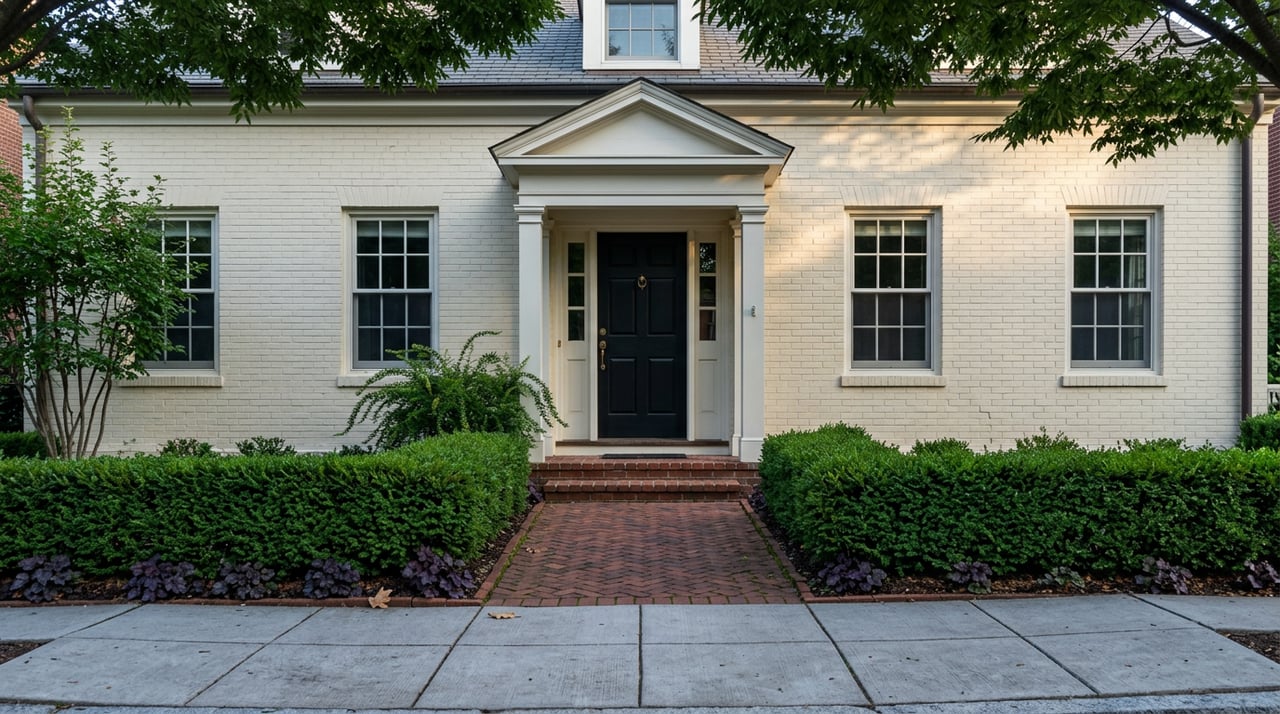
Walk any block off State Street and you're walking on infrastructure that predates most of the houses behind it. Brick inlays, mature street trees, sidewalk panels that have been patched and repatched since long before Rose Tree Media was a district name. It's part of what makes Media feel like "Everybody's Hometown." It's also something that can show up on a borough inspection during a sale.
Sellers brace for the buyer's home inspector: the roof, the furnace, the water heater tucked behind the basement stairs. What catches almost everyone off guard is a second inspection that has nothing to do with any of that, run not by a private inspector but by the Borough of Media's own Code Enforcement Department, and required at every single change of ownership.
Media's Use and Occupancy Inspection
Media requires a use and occupancy inspection for every dwelling before it changes hands. The borough's own page on the requirement is direct about it: the inspection exists to confirm the home is safe to occupy, and a Certificate of Occupancy isn't issued until the property is in compliance. Code Enforcement performs these point-of-sale inspections in addition to the annual inspections it runs across residential and commercial properties in the borough.
The published fee schedule puts a number on it: $100 plus $10 per unit for a resale Certificate of Occupancy, and a $50 fee if the property needs a second look after the first inspection turns something up.
This isn't a Media quirk invented to slow down closings. It's part of a pattern across the Philadelphia suburbs, though not a universal one. According to the Suburban Realtors Alliance, roughly half of the municipalities in the Philadelphia suburbs require a point-of-sale code inspection before a home can change hands. That means a buyer relocating from a township without this rule, or a seller who last sold a house twenty years ago in a different borough, can genuinely not know this step exists until it lands in their contract.
Here's the shorthand version of what's different:
| Private Home Inspection | Media's Use & Occupancy Inspection |
|---|---|
| Ordered by the buyer | Required by the borough at every change of ownership |
| Covers structure, systems, and appliances | Covers safety code items, including the public sidewalk and curb in front of the house |
| Cost is negotiated between buyer and seller | Paid through a borough fee |
| A failed inspection is a negotiating point | Before 2016, a failed inspection could legally stall settlement |
That last row is where most of the confusion lives, and it's worth its own section.
The Line Item That Trips Up Almost Every Seller
Ask any Media seller who's been through this what actually got flagged, and the answer is rarely the electrical panel. It's the sidewalk.
Media runs a dedicated sidewalk inspection program built around public safety, and the borough's code is specific about what "in good repair" means. Under Chapter 253, Article IV of the Media Borough Code, every property owner is responsible for maintaining the curbs and sidewalks along their frontage. The specs aren't vague: curbing has to be at least 18 inches high, six inches thick at the top and eight at the bottom, and sidewalk concrete has to run at least four inches thick on standard sections, six inches where a sidewalk doubles as a driveway.
If an inspector flags a violation, the owner gets 120 days from the date of notice to complete the repair, with a possible extension if there's already a signed contract with a construction company to finish the work within 60 days of signing. If nothing happens, the borough hires its own contractor each year to finish the curbs and sidewalks owners haven't fixed, and the cost lands back on the owner. The code uses the same idea for dangerous conditions that can't wait: the borough makes the repair immediately and recovers the cost through a municipal lien if needed.
None of this is dormant policy sitting on a shelf. The borough has been visibly active on its streets this year: Aqua Pennsylvania began replacing 3,200 feet of water main along North Orange Street the week of June 15, 2026, and the borough is currently working through a traffic calming grant tied to its 2020 Traffic Calming Plan, according to the Public Works updates page. A borough paying this much attention to its right-of-way is not a borough likely to wave through a heaved sidewalk panel at resale.
A cracked sidewalk square rarely stops a sale in Media. It just decides who ends up paying for it, and when.
Why a Flagged Sidewalk Doesn't Kill Your Closing Anymore
Here's the part that changes how a seller should actually think about all of this.
Pennsylvania's Municipal Code and Ordinance Compliance Act, originally passed in 2000 and significantly amended by Act 133 in 2016 and again by Act 93 in 2024, used to let municipal inspectors withhold a Certificate of Occupancy outright over violations found in a point-of-sale inspection. Sellers who couldn't afford the repair before their closing date sometimes watched settlements get delayed or canceled entirely, because the borough had no obligation to let the sale proceed with an open violation.
Act 133 changed that mechanism directly. A municipality can no longer withhold a use and occupancy certificate purely because of a code violation found at resale. Instead, the homeowner gets 12 months to resolve it, which gives buyer and seller room to negotiate a credit, a temporary certificate, or a repair timeline that doesn't hold the closing hostage.
That's the piece most sellers don't know when the inspection report lands in their inbox. A flagged curb feels like a dealbreaker. Legally, since 2016, it's a negotiation with a 12-month clock attached, not a closed door.
Building the Timeline Backward From Closing
The sellers who move through this cleanly are the ones who treat the borough's inspection as part of pre-listing prep, not a surprise that shows up mid-contract.
- Walk your own frontage before you list. Look for what the inspector will look for: heaving panels, curb height that's settled below the 18-inch minimum, cracks wide enough to catch a heel.
- Schedule the use and occupancy inspection well ahead of your anticipated closing date, ideally with a month of runway, so there's time for a second look if something needs correcting.
- If something is flagged, ask about a temporary certificate rather than assuming the sale is at risk. That's the exact mechanism Act 133 built into state law.
- Budget for the $50 reinspection fee if the first pass doesn't clear, and remember that any sidewalk or curb work the borough ends up completing after a missed 120-day window gets billed straight back to the owner.
What This Means If You're Listing in Media This Year
The homes that move cleanest through Media's closing process aren't always the ones in the best shape behind the front door. They're the ones where the seller, or the seller's agent, treated the sidewalk out front with the same seriousness as the roof, because the borough already does.
That's a small piece of a much larger picture, but it's the kind of detail that separates a smooth close from one stalled over a sidewalk repair nobody budgeted for. Coordinating the Code Enforcement timeline alongside pricing, marketing, and buyer negotiation is part of what full-service representation looks like, whether the listing is a seven-figure estate or a modest twin off Baltimore Pike.
A few common questions
Does every Main Line town require this kind of inspection before a home can sell? No. Point-of-sale code inspections vary by municipality, with roughly half of the townships and boroughs in the Philadelphia suburbs requiring one. A rule that applies in Media doesn't automatically follow you across the border into the next township.
What if I can't finish sidewalk repairs before my closing date? Since Act 133 amended state law in 2016, Media can't hold your settlement over an open violation indefinitely. You get a 12-month window to resolve it, which in practice usually turns into a credit negotiation with the buyer rather than a canceled contract.
If you're weighing when to list a home in Media, the borough's paperwork deserves a spot on your timeline before the sign goes in the yard, not after an offer arrives. Larisa Bevan works out of Berkshire Hathaway HomeServices Fox & Roach and has walked Media sellers through exactly this sequence. Schedule a consultation to map out your timeline before you list.
This article is general information, not legal, tax or financial advice. Consult a qualified professional about your situation.